FROM CONCEPT TO A SELF-SUFFICIENT AI DATA CENTRE
We recently explored an ambitious question as part of a feasibility for a client:
Could a 40,000 m² data centre operate predominantly from its own renewable and low-carbon infrastructure, without placing a significant additional burden on local electricity and water services?
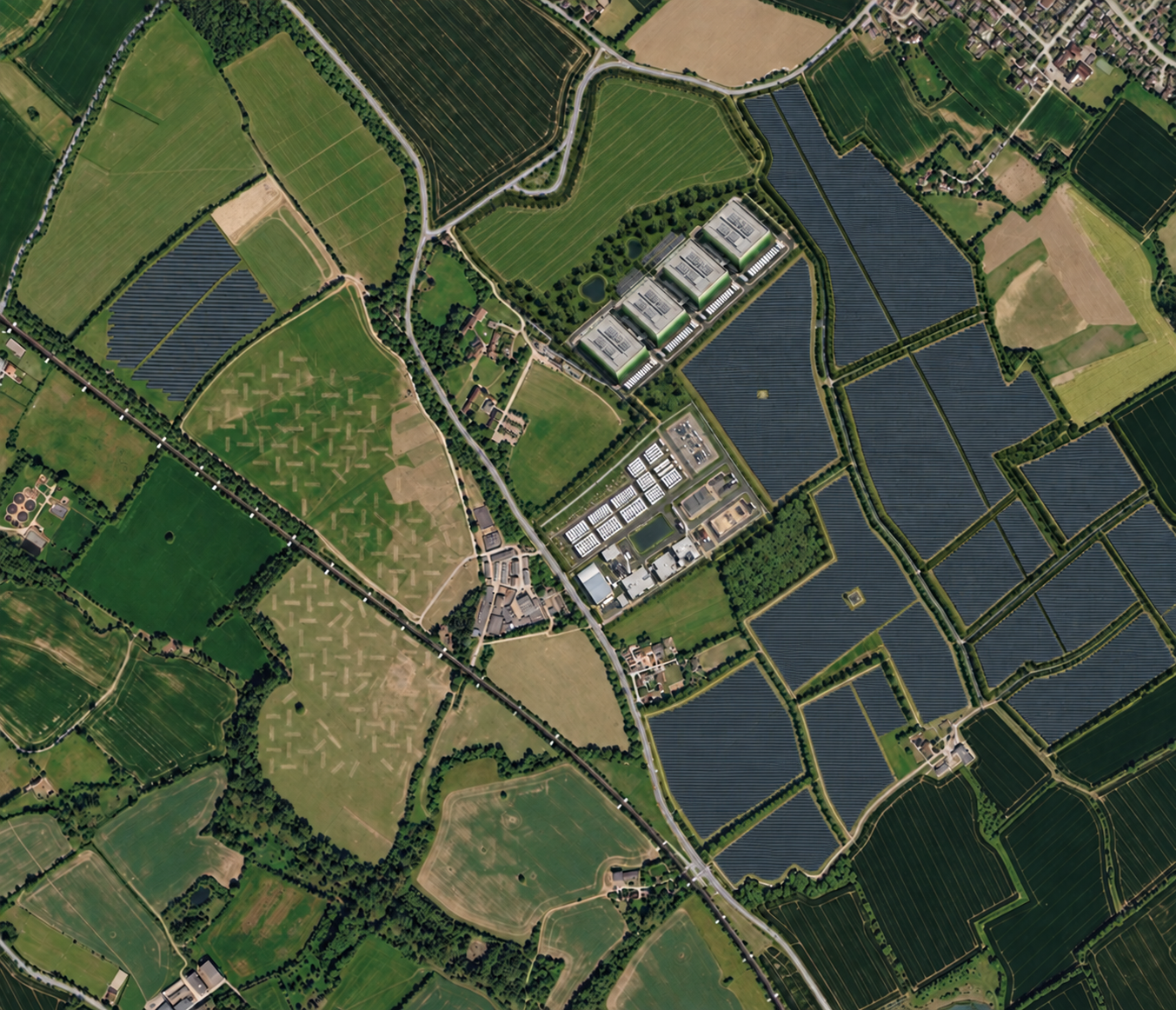
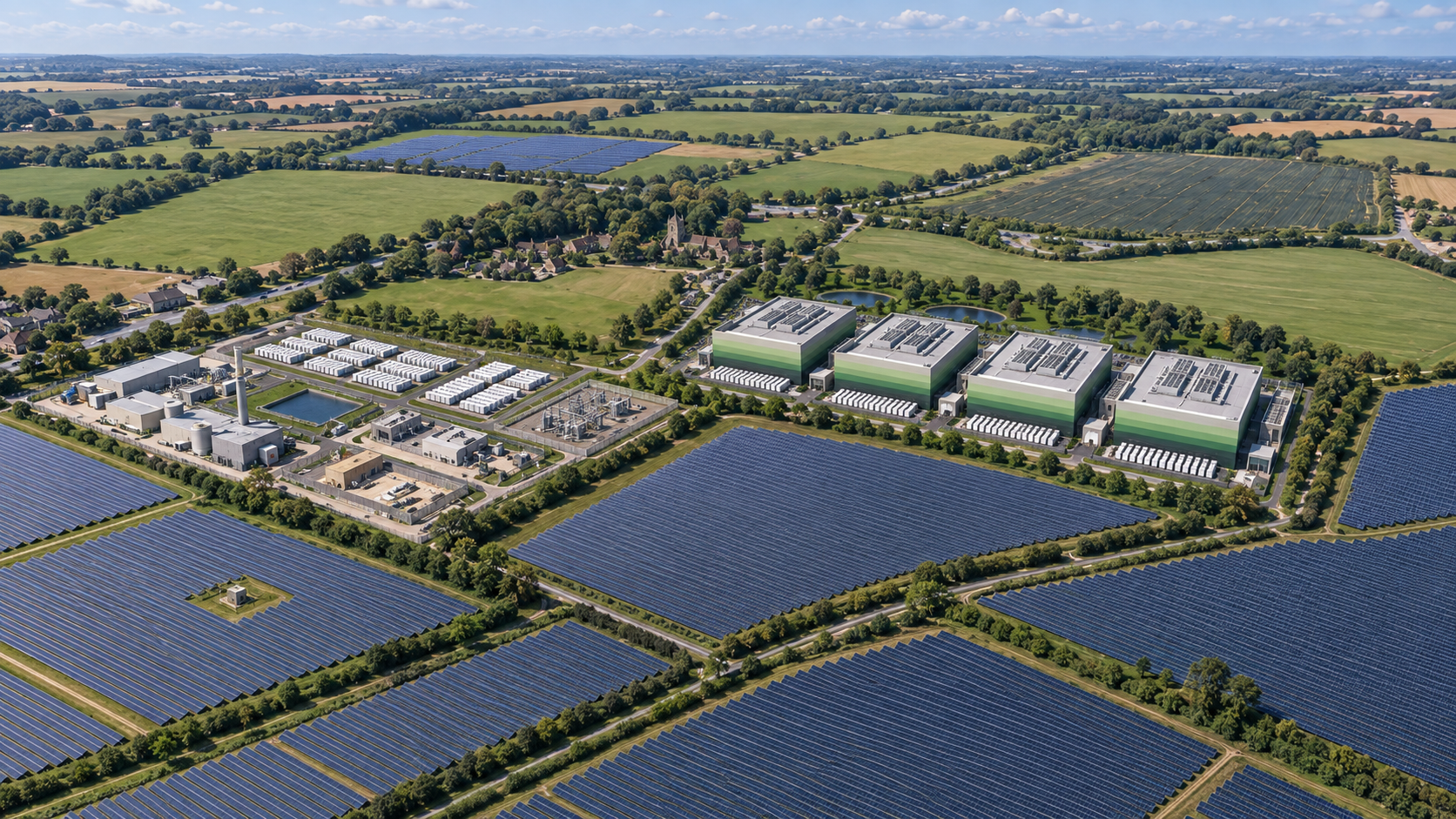
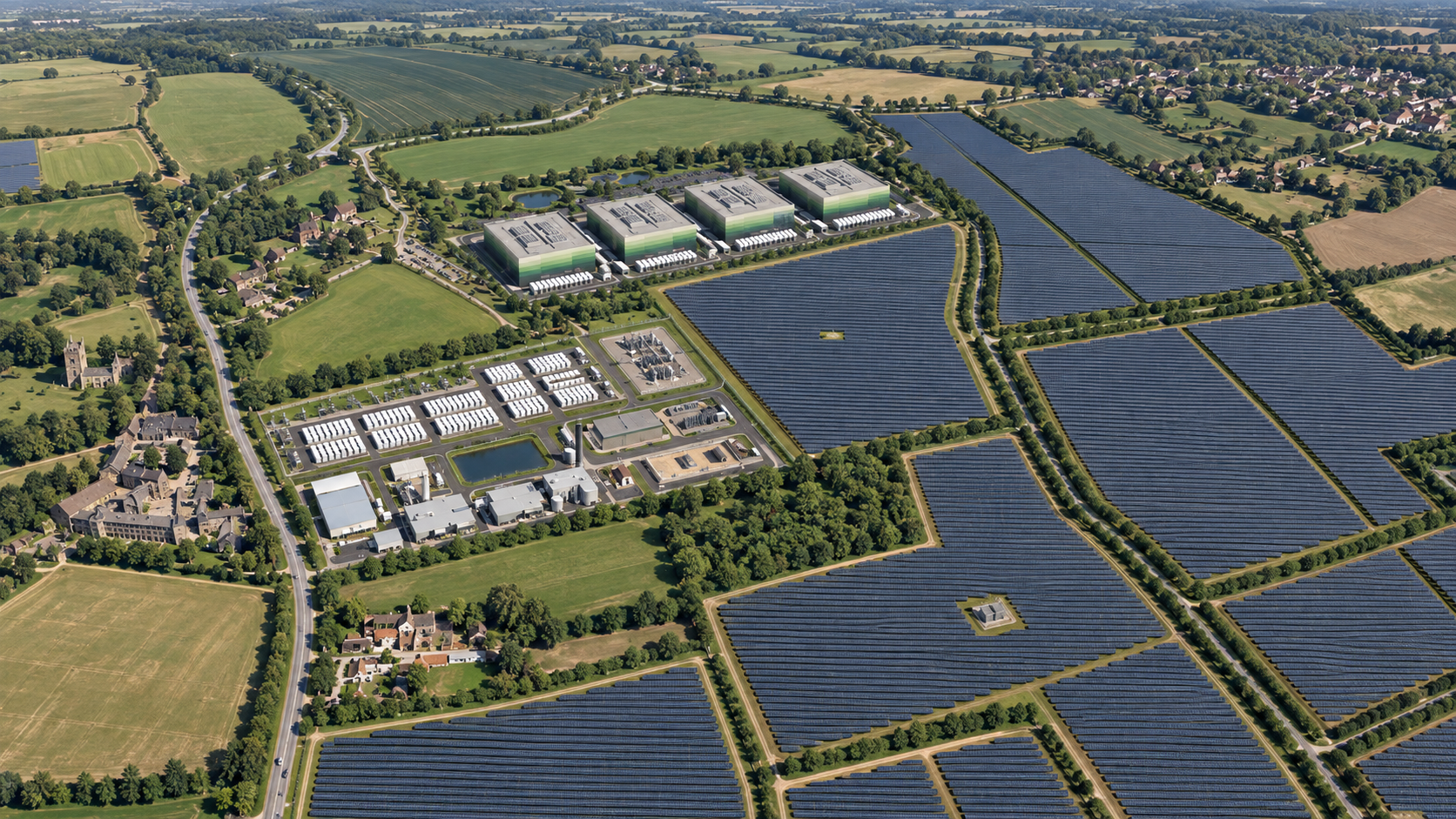
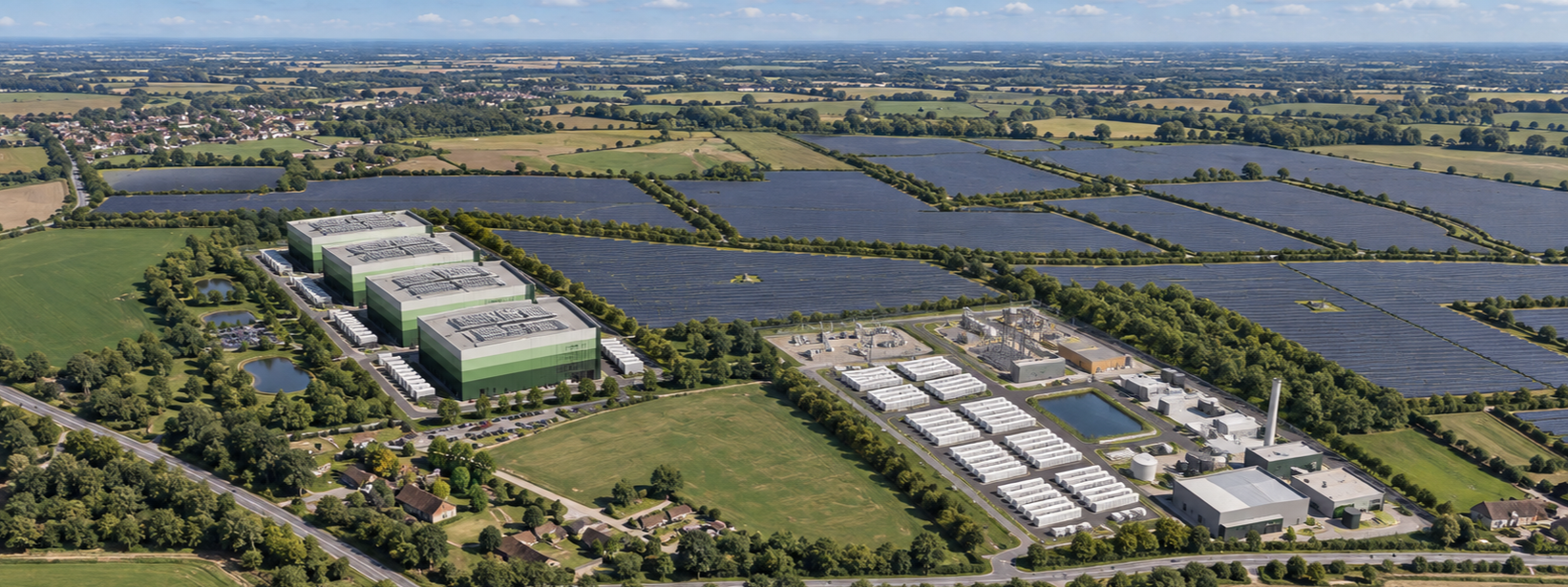
The initial masterplan brought together:
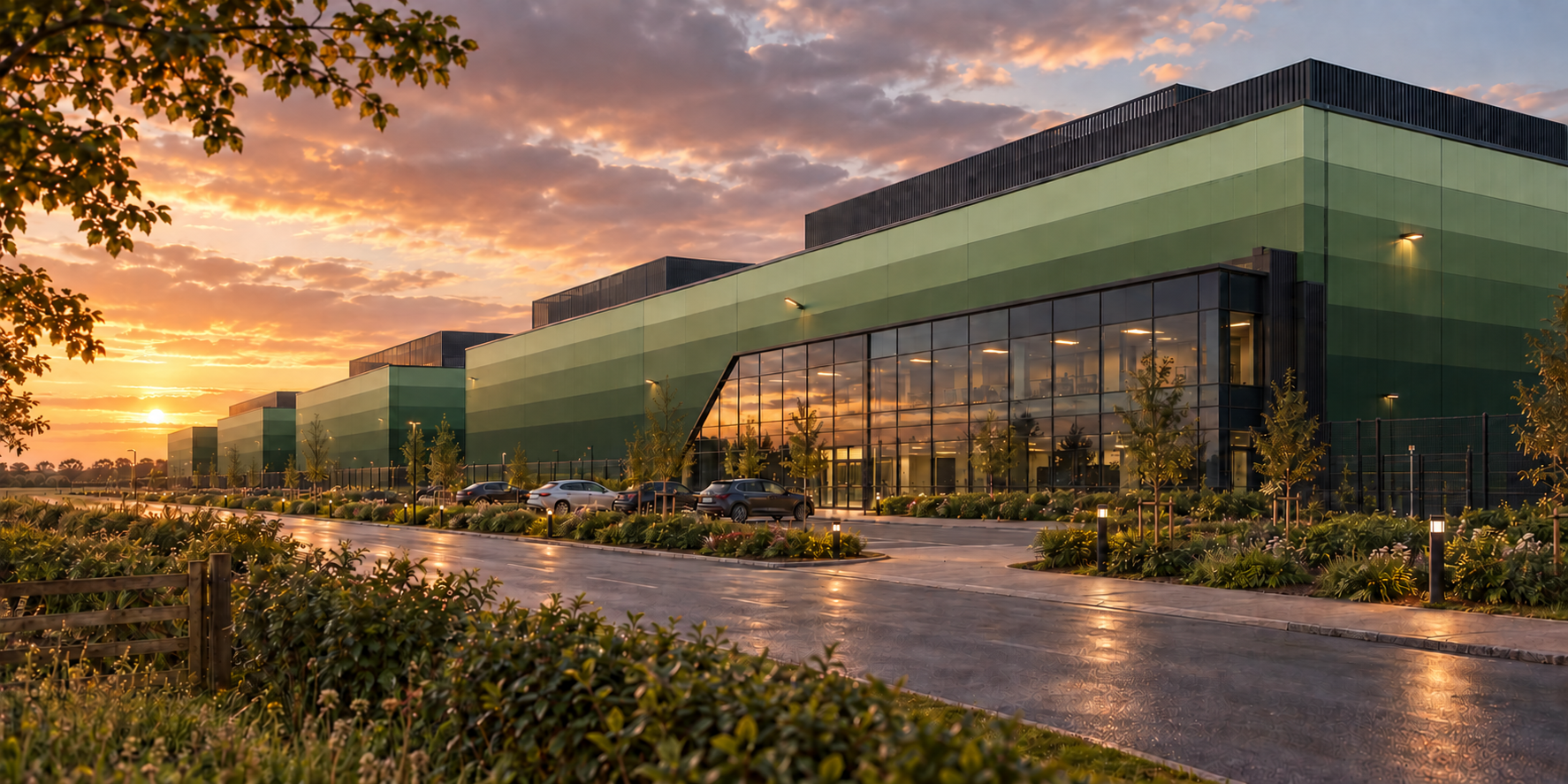
• A 40,000 m² data centre
• A 27.7 MWe biomass combined heat and power plant
• Approximately 300,000 m² of solar panels across 205 acres
• 64 battery-storage containers
• On-site cooling-water and stormwater storage
At first glance, this appears to be a highly self-sufficient energy campus. However, the feasibility depends less on the building’s floor area and more on what happens inside it.
THE CONCLUSION
Self-sufficiency must be designed from the required IT load backwards.
A large building does not automatically require a large electrical load, and a large solar farm does not automatically make a facility continuously self-sufficient.
The successful design is the one that aligns:
• Computing capacity
• Firm power
• Renewable energy
• Energy storage
• Cooling technology
• Water availability
• Stormwater management
• Phased occupation
The final concept is therefore not a fully fitted 200 MW AI facility pretending to be self-sufficient.
It is a scalable 40,000 m² AI campus beginning with a genuinely supportable 25–30 MW phase, using closed-loop cooling, harvested rainwater, on-site generation and carefully planned expansion.
That is a more credible route to resilient, low-impact digital infrastructure—and a far stronger foundation for the planning, engineering and investment process.